


Reimagining Real Estate as a Force for Generational Wealth and Community Building
At eight or nine years old, Heather Fordham would spread out the Sunday Chronicle on the floor, turning immediately to the home section. She’d study floor plans and photographs of houses, wondering about the families who lived there, imagining their stories. Most children that age dreamed of becoming astronauts or teachers. Heather dreamed of real estate.
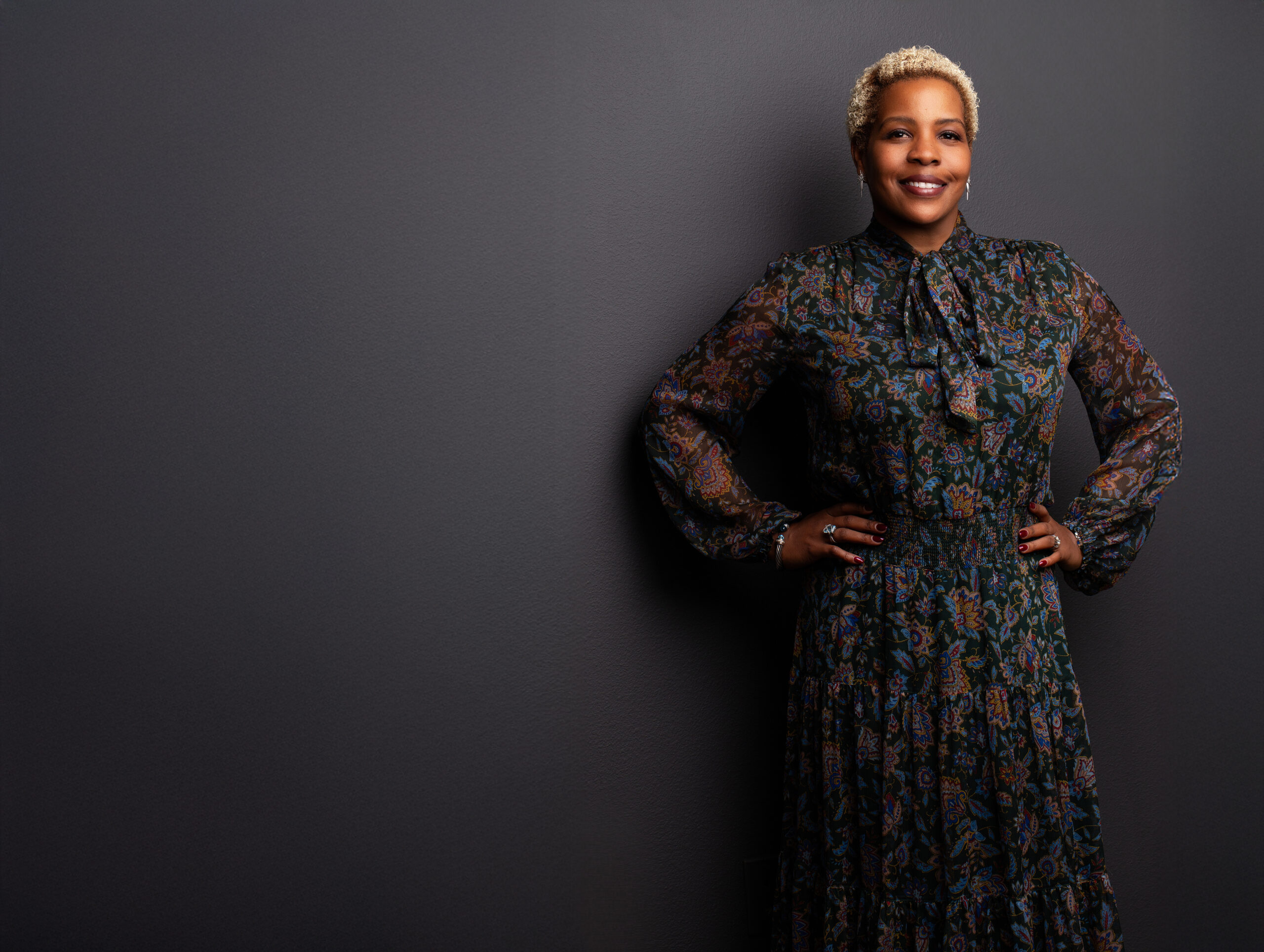
Over two decades later, that childhood fascination has evolved into something far more powerful: a mission to fundamentally reshape how people access real estate ownership and build generational wealth. As team lead for New Heights Group at Compass and founder-CEO of Hestia Global Services, Heather isn’t just selling homes—she’s dismantling barriers to wealth creation and rewriting the rules of an industry she believes has been broken for too long.
Her journey from studying Sunday floor plans to pioneering new frameworks for democratizing real estate investment reveals a leader who refuses to accept “how things have always been done” as an acceptable answer to systemic problems.
From Leasing Agent to Mergers and Acquisitions Maven
Heather’s professional entry into real estate came at 25, when a childhood friend managing a multifamily community suggested she’d be great as a leasing agent. Fresh out of the insurance industry and already hanging around the property anyway, Heather figured, “Why not?”
That casual decision became the beginning of an extraordinary trajectory. She worked her way up from leasing to assistant manager to manager, learning the business from the ground up. Then something remarkable happened: the property went up for sale—a $40 million transaction—and Heather was identified as the person to give tours to prospective buyers.
“I wasn’t a commercial real estate person,” she recalls. “That was a whole separate team. I was just the onsite person that was giving the introduction.”
But her knowledge, presence, and ability to showcase the property’s value impressed the acquiring company so much that they insisted she come along with the purchase. They placed her on different properties and moved her into mergers and acquisitions, relocating her from property to property as they sold assets.
“I’ve just been going ever since,” Heather says. And the stories of how opportunities have appeared along her path? “They would blow your mind. That’s why I just know this is what I’m supposed to be doing with my life.”
Thriving in Chaos: No Typical Day
Ask Heather what a typical day looks like, and she’ll laugh. “There is no typical day, and I love it.”
For Heather, the spontaneity and chaos of real estate aren’t obstacles—they’re the entire appeal. She thrives bringing peace and joy to clients navigating uncertainty, knowing that opportunities drop when you least expect them and staying ready to seize them.
But she’s also acutely aware that the industry sits at an inflection point. Many agents believe they can keep doing what they’ve always done because human beings will always be required in real estate transactions. Heather sees this thinking as dangerously outdated.
“That may be true to a certain level and degree, but how you stay relevant and how you continue to bring your service to that process should change to meet the moment,” she explains.
It’s the philosophy of “Who Moved My Cheese?”—a book about adapting to change that Heather has never actually read but seems to live instinctively. Her husband pointed out the parallel, surprised she wasn’t familiar with it. For Heather, constantly looking for ways to be of more service isn’t something she learned—it’s simply how she operates.
Beyond Transactions: Becoming an Advisor
Heather is currently in a deliberate growth phase, repositioning herself from transactional real estate professional to advisor who specializes in real estate capacity. It’s a crucial distinction that reflects her deepening expertise and expanding vision.
Serving primarily Houston’s inner loop neighborhoods (inside the 610 Loop) and major suburban markets like Cypress, Woodlands, Katy, and Sugarland, Heather brings both insurance and real estate licensing to her practice. This dual expertise allows her to guide clients through the complete financial picture of homeownership—not just the mortgage, but the insurance protection, life insurance considerations, and risk management strategies that safeguard their investment.
“Your mortgage is one aspect, but then you need insurance to protect your home,” she explains. “You also now have that debt obligation. If something happened to you and you weren’t able to go to work, now your mortgage is in jeopardy.”
Too many buyers focus solely on monthly payments without considering long-term value or protecting the asset they’ve worked years to acquire. Heather ensures her clients understand the full scope of homeownership and have strategies in place to protect their investment against life-changing situations.
Reading Houston’s Unique Market Dynamics
Heather describes the Houston market heading into 2026 as emerging from “the great freeze”—the period when low interest rates locked existing homeowners in place while simultaneously limiting inventory for buyers. Baby boomers sat on properties, unwilling to give up favorable rates and unable to find suitable alternatives in the limited inventory available.
“People are coming out of that now,” Heather observes. With interest rates declining into the high fives and low sixes predicted for 2026, inventory is opening up, pricing is balancing, and movement is returning to the market.
But Houston offers advantages that transcend interest rate cycles. The city remains pro-business with no state income tax, making it extraordinarily attractive for entrepreneurs and companies relocating. The climate is generally mild (though Heather acknowledges summers are intense), and most importantly, the cost of living remains relatively affordable compared to coastal markets.
“Houston has a unique ability to always constantly be reinventing itself in a way that the city grows through downturns and through economic issues,” Heather notes. “We always seem to come out on top.”
Even during the 2008 recession, Houston outperformed national averages. The city’s economic diversity—oil and gas, the massive Texas Medical Center, and growing IT and venture capital sectors—creates resilience that other markets lack.
Embracing Diversity as Houston’s Greatest Strength
As a multi-generation Texan and Houstonian, Heather takes particular pride in the city’s diversity. Houston attracts international talent across industries, creating a metropolitan environment where countless cultures coexist and thrive.
“I got to grow up in that,” she reflects. “Meeting people, understanding different cultures, and getting to appreciate it without having to leave my city.”
She’s quick to challenge misconceptions outsiders hold about Texas. “I think everybody brings their own idea of what Texas is, and when they get here, they’re pleasantly surprised. We are an extremely diverse state.”
The warmth, community focus, and working-together-for-the-better mentality define Texas culture. “We’re very independent-minded people, but we’re very community focused.”
Each Houston neighborhood has its own distinct vibe. The Heights appeals to those seeking historic character. West University offers suburban-urban blend. Montrose welcomes the LGBTQ+ community with open arms. Suburban options like Katy, Cypress, Woodlands, and Sugarland provide family-friendly environments with excellent schools.
“You need to get with an agent and actually talk about your lifestyle and what you want from your community and how you live in your space to find the right community for you,” Heather advises.
And please, she adds, don’t let Houston’s lack of zoning scare you. The city isn’t Naples or California—it’s uniquely Houston, and that’s exactly its appeal.
The Personalized Roadmap: It’s About Your Plan, Not the Market
When clients ask whether now is a good time to buy or sell, Heather’s response cuts through generic market advice: “What is your plan?”
She sits down with clients to create comprehensive roadmaps covering their immediate goals and their 3, 5, and 7-year vision. Then she builds strategies around those plans, taking advantage of whatever market conditions exist.
“You cannot necessarily plan your life around the economic wins because otherwise you’ll never do anything,” she explains. “Real estate never stops. Life never stops. You just have to make the best decisions and position yourself the best you can.”
Had a baby? Need more space? Job transfer? These life events don’t pause for ideal market conditions. If interest rates limit buying power, the solution might be saving more to make rates less impactful. If the timing works for your life, you make it work financially—there’s always a way.
This customized approach reflects Heather’s advisor mindset. She’s not pushing transactions based on market momentum; she’s aligning real estate decisions with life plans.
Solving the Affordability Crisis: Taking Matters Into Her Own Hands
Housing affordability has become a crisis, and Heather has decided she’s not waiting for traditional developers or government solutions. She’s changing the market herself.
“We can solve the affordability crisis that we’re all experiencing,” she states with conviction. “It’s going to require people to start considering maybe we don’t need to wait on the old guard.”
Heather advocates for smaller developers, more public-private partnerships, and strategic investment in emerging neighborhoods that offer future potential at current affordability. Areas like Shady Acres, Independence Heights, Garden Oaks, Oak Forest, and Shepherd Park provide proximity to desirable locations like the Heights while offering better price points for long-term investors.
But her vision goes deeper. She’s researching 3D-printed homes, alternative construction materials, and innovative housing models that could genuinely address affordability without sacrificing quality. She warns against solutions that sound affordable but aren’t—like 600-square-foot units that cost $150,000 but scale to $900,000 for livable space.
“We don’t want cheap. We want real good quality, affordable housing,” Heather clarifies. “And it can be done. It’s going to be done.”
The confidence isn’t bravado—it’s commitment backed by action through her work with Hestia Global Services.
Hestia Global Services: Democratizing Real Estate Investment
The project closest to Heather’s heart emerged from a conversation with her 26-year-old son, who told her, “Mom, I’m never going to be able to buy a house.”
That statement broke her heart. Homeownership is how you build wealth and financial independence—acquiring assets that appreciate without requiring daily labor. Heather wanted her son to experience the pride of achieving homeownership himself, not receiving it as a gift.
When he mentioned the new iPhone would cost about $1,700, Heather started calculating. What if that money went into a real asset instead? What if it could grow, generate dividends, and eventually turn $1,700 into $5,000 or more—all rooted in something tangible?
That’s how Hestia was born (though the name will change as the founder journey evolves). The framework allows people across all socioeconomic levels to access institutional-grade real estate investment opportunities in real-time, starting with amounts as small as what they’d spend on luxury consumer goods.
“I wanted to be able to be accessible through all socioeconomic levels,” Heather explains. The vision democratizes real estate investing for everyday people, creating pathways to wealth building that don’t require six-figure down payments or extensive portfolios.
But Hestia represents more than financial innovation—it’s about empowering people to solve their own problems. Heather watched massive amounts of money pour into political systems with questionable results for everyday Americans. She asked herself: what if people could direct that money toward guaranteed outcomes like affordable housing and community building?
“If I create this system where people can actually put their money there and guarantee that we are going to build homes that people can afford, places where people can have community, now we’re solving our own problems,” she says.
It’s not about running for office—Heather has been approached about that repeatedly and has no interest. “At that stage I lose my ability to actually affect the change that I want,” she observes.
Instead, she’s building systems that prove people have more power than they realize to create change themselves.
AI: Enhancement, Not Replacement
Heather describes herself as “about as pro-human as it gets,” but she recognizes AI’s inevitable role in real estate’s future. The key is ensuring technology enhances human experience rather than making people redundant.
“It should be enhancing what we already bring to the table that is uniquely human,” she emphasizes. In residential real estate, the emotional aspects—making someone feel a space, envisioning their life unfolding there—remain distinctly human. AI can’t replicate that.
But analysis, location data, financial modeling, and comparative insights? AI excels at these tasks, pulling data and generating reports that would take humans hours or days. The crucial element is human interpretation.
“What difference does it make if you have a 6% gain in X, Y, and Z and a 4% loss if you don’t understand it?” Heather asks. “You need someone who’s going to interpret what that actually means for your life and what that means for your long-term plan.”
AI can also streamline workflows, freeing agents from tedious administrative work to be more available to clients. Heather embraces these efficiencies while remaining vigilant about maintaining the human connection that makes real estate transactions meaningful.
She also raises a critical concern many overlook: data centers. As AI usage grows, the real estate footprint and natural resource demands of data centers will explode. They require massive amounts of water—a resource human beings, animals, and agriculture also depend on.
“We need to be very intentional about how we find that balance,” Heather warns. “We cannot eat AI.”
Balancing Data with Human Intuition
After 22 years in the industry, Heather has developed what she describes as an ability to “feel the shift” when major economic events occur. Tariffs, interest rate changes, Fed decisions—she senses the impact rippling through consumer confidence before data confirms it.
“Nine times out of ten, I’m on the front end of it because my clients are already calling me in advance,” she explains. Business leaders share what they’re seeing in their industries, clients report concerns about layoffs, and all this real-time information shapes Heather’s understanding of market psychology.
“It’s very difficult for data to tell you what human confidence is, what consumer confidence is, because that ultimately is the driving force of whether or not we’re going to have a strong housing market.”
When a client asked her to predict what his house would sell for in a year if certain economic conditions played out, Heather’s answer exemplified her approach: “I cannot. But let me explain it to you this way.”
She walked him through the contributing factors—layoffs affecting consumer confidence, construction costs influencing home prices, the interplay of variables that could swing outcomes dramatically. She couldn’t give him a number, but she could give him the framework to understand how changes would impact him.
“This is what I feel like the human intuition and understanding and having seen enough market cycles” brings to client relationships, she notes.
What the Next Generation Will Demand
Heather predicts the next generation of buyers will prioritize sustainability in ways previous generations didn’t. Owning a home means little if you’re worried about epic floods, droughts, or energy costs skyrocketing due to grid strain from data centers.
“Smaller footprints, community-based living,” she forecasts. Not six-bedroom, 5,000-square-foot houses with massive yards that turn homeowners into “slaves to their homes.” Instead, comfortable, affordable spaces people can actually own without being crushed by overhead.
Houston currently does a terrible job of fostering community-based design, Heather admits. The lack of zoning means developers can buy lots and throw up four houses with no consideration for neighborhood cohesion or community engagement.
“I want to change that,” she states simply. “People want a little bit of hearkening back to that 1950s kind of lived environment where you know your neighbors and you see people out walking their dogs.”
Sustainability features like solar, rain capture, air purification, and energy efficiency will become non-negotiables rather than luxuries—if the product is available. Right now it’s not, “but that’s because people haven’t been making it a priority. Which is why I’m going to change it.”
The Impact of Homeownership Done Right
Heather’s biggest claim to fame? Nearly 75% of her clients either got married or had children shortly after purchasing their homes with her guidance.
“I’d like to say I had a hand in that,” she says with pride. “Creating that environment for them to feel like they are stable enough to grow their lives and move forward in their lives gives me all the joy in the world.”
That joy drives her mission with Hestia. She can only handle so many individual transactions personally, but through the new framework she’s building, she can impact millions of people—helping them access wealth-building opportunities, achieve homeownership, and create the stability that allows life to flourish.
When clients close with Heather, they feel 100% confident in their understanding and their decision. They know their goals, needs, and desires have been thoroughly considered. They trust this is the right choice for them. And they know Heather will remain accessible long after closing, because the relationship matters more than the transaction.
A Leader for a New Era
In an industry resistant to change, Heather Fordham represents the future: advisors who combine deep expertise with systems thinking, who leverage technology without losing humanity, and who refuse to accept broken systems as permanent conditions.
She’s not waiting for developers to prioritize affordable housing—she’s building it. She’s not waiting for government to solve wealth inequality—she’s creating access. She’s not waiting for the industry to evolve—she’s evolving it herself.
For buyers and sellers in Houston, Heather offers unparalleled knowledge of the market’s unique dynamics, personalized roadmapping that aligns real estate with life plans, and comprehensive financial guidance that protects investments long-term.
For the next generation locked out of homeownership, she’s building Hestia—a framework that proves wealth building doesn’t require wealth to begin with, just access to the right opportunities at the right scale.
For an industry at an inflection point, she models what staying relevant looks like: embracing change, solving real problems, and always asking how to be of more service.
“There’s reason to be hopeful,” Heather tells anyone worried about their ability to achieve homeownership or build wealth. “Not everything is lost, and there are people really, really working hard to make sure that you can reach your dreams and goals.”
Come to Houston. Come to Texas. There’s so much here, and Heather Fordham would love to help you discover it—whether you’re buying your first home, building a real estate portfolio, or joining the movement to democratize wealth creation for everyone.




Read the Comments +